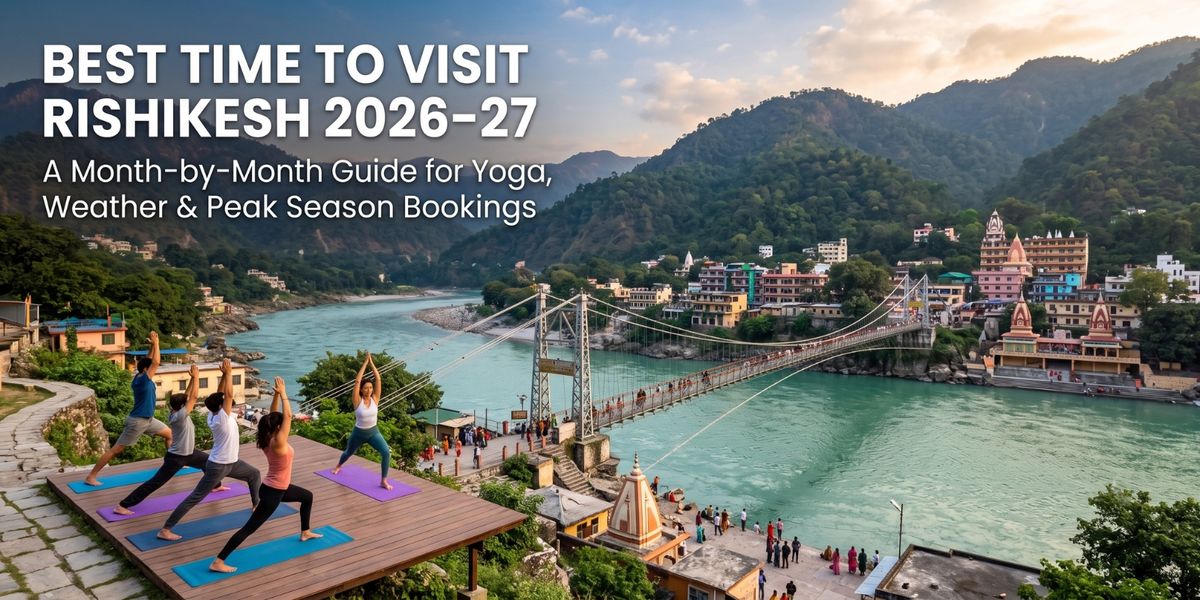
Best Time to Visit Rishikesh 2026–27: A Month-by-Month Guide for Yoga, Weather & Peak Season Bookings
If you've typed "best time to visit Rishikesh" into Google, you're probably staring at a calendar right now, trying to figure out when the Himalayas, the Ganga, and your schedule will finally line up. Good news — Rishikesh doesn't really have a bad time to visit. It has different times, each with its own personality. But if you want the version of Rishikesh that shows up on postcards — blue skies, cool mountain air, and the river at its most photogenic — you're looking at one clear window: October to February.
Let's break down what each month actually feels like on the ground, so you can pick the trip you actually want, not just the one Google tells you to book.
Rishikesh's Three Seasons, Explained Simply
Before the month-by-month breakdown, it helps to know the three broad seasons that shape any Rishikesh trip:
- Peak Season (October–February): Clear skies, cool evenings, the best visibility of the Himalayan ridgeline, and the calmest atmosphere for yoga and meditation.
- Adventure Season (March–May): Warmer days, full-flow river rafting, and a livelier, more social energy — great if you want activity alongside your retreat.
- Monsoon / Off-Season (June–September): Heavy rain, lush green hills, dramatically fewer tourists, and some of the lowest rates of the year — good for a quiet, budget-friendly reset if you don't mind the weather.
Now let's go month by month.
October: Where Peak Season Begins
October is the hinge point of the year. The monsoon clears out, the air turns crisp, and the hills are at their greenest right before winter dries everything out. Days are warm enough for a t-shirt, evenings are cool enough for a light layer — genuinely the most comfortable stretch of weather Rishikesh sees all year.
This is also when Rishikesh starts filling up fast. Anyone who wants a room with a Himalayan view during Diwali or the early winter rush should be booking by August or September, not October.
Best for: First-time visitors, yoga retreat starters, sightseeing without summer heat.
November: The Sweet Spot
If there's a single "best month," most repeat travellers will say November. The skies are at their clearest, the light in the mornings is extraordinary, and the crowds haven't yet hit their December peak. Temperatures sit comfortably in the teens to low twenties during the day, dropping to single digits at night — perfect sweater weather for sunrise yoga on the ghats.
Best for: Photography, meditation retreats, quiet ashram stays, couples seeking a peaceful escape.
December: Peak Season, Full Swing
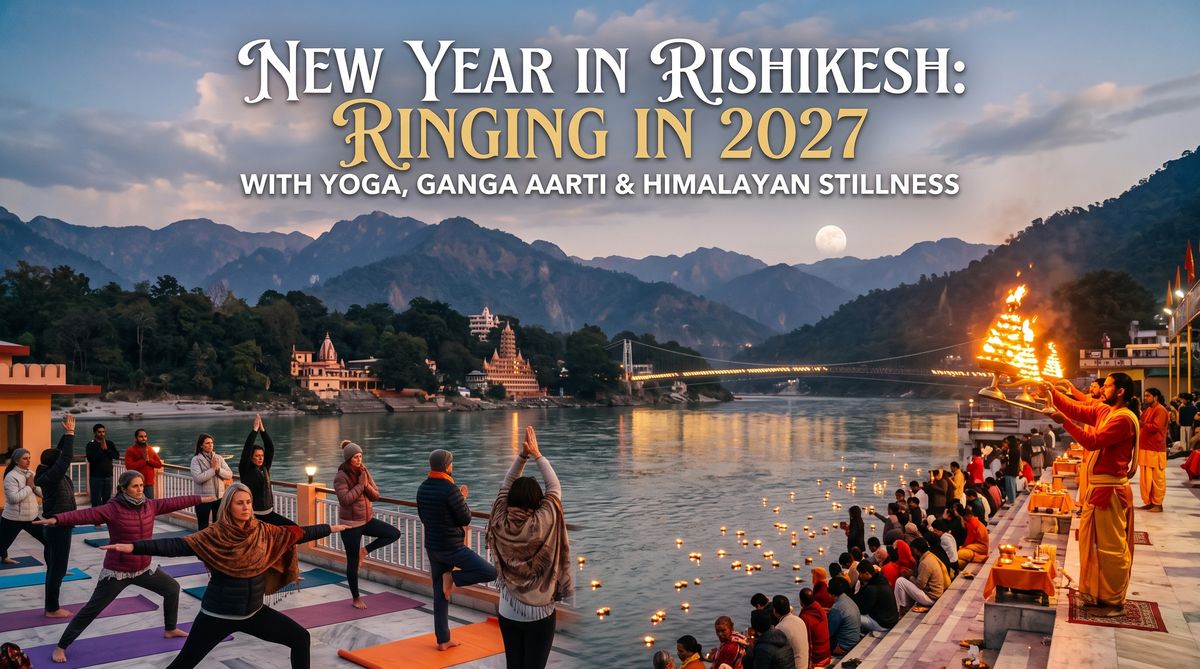
December is when Rishikesh gets genuinely busy. Domestic travellers on year-end breaks, international guests escaping colder climates, and a steady stream of yoga practitioners all converge here. Expect chilly mornings, possible light fog near the river, and a festive, sociable energy in cafés and yoga shalas alike.
Rooms fill up especially fast around Christmas and New Year's week — often weeks in advance. If a December trip is on your radar, this is the month to lock in dates early rather than "figure it out later."
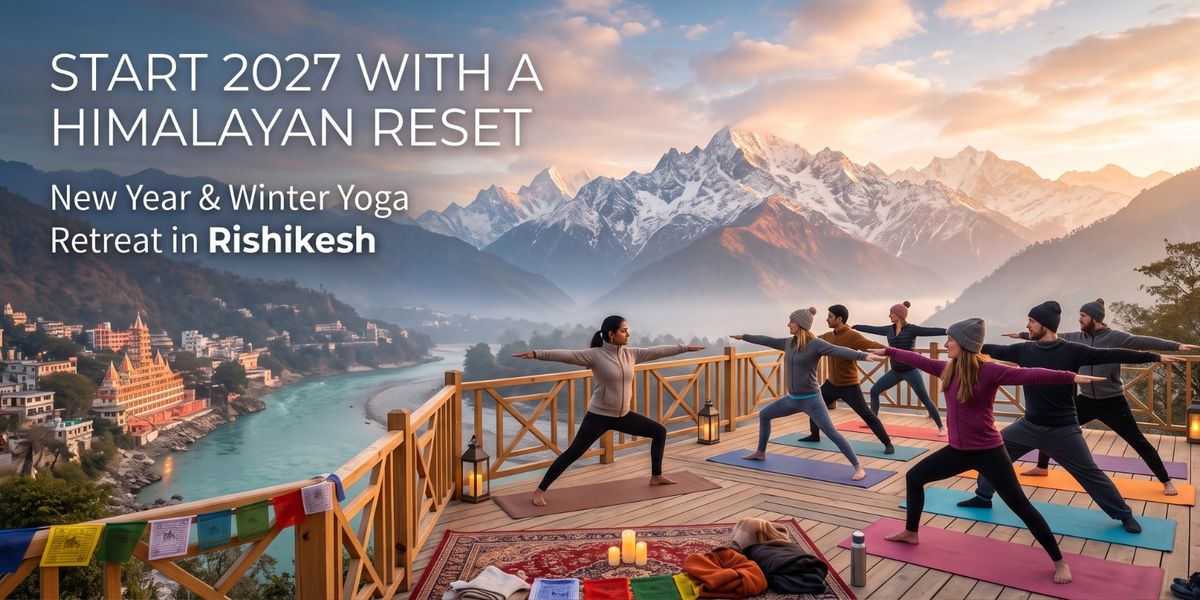
Best for: Group retreats, New Year's wellness resets, travellers who like a bit of buzz alongside their calm.
January: The Quiet After the Rush
Once New Year's crowds clear out, January settles into something genuinely special — cold, clear, and calm. This is peak season for serious practice: many yoga schools start their long-term teacher training programs in January, and ashrams see fewer casual tourists and more committed students.
Mornings can be properly cold, so pack layers, but the payoff is some of the clearest Himalayan views of the year and the most focused, undistracted atmosphere for a retreat.
Best for: Yoga teacher training, deep meditation retreats, travellers who want peace over social buzz.
February: The Festival Month
February brings Rishikesh's most famous event — the International Yoga Festival, typically held at Parmarth Niketan in early March but drawing crowds through late February as well. The weather is still cool and pleasant, though you'll start to feel the first hints of spring warmth by month's end.
Best for: Yoga festival attendees, travellers who want peak-season weather without the December crowd surge.
Why October–February Is Considered Peak Season
Put simply: this is when Rishikesh looks and feels like the version everyone imagines. Clear skies mean uninterrupted Himalayan views. Cool, dry air makes outdoor yoga and riverside walks genuinely pleasant rather than something to endure. And because most rafting and trekking outfits scale back winter operations, the town's energy shifts naturally toward its original identity — a wellness and meditation destination, not just an adventure-sports stopover.
The trade-off is simple too: everyone else knows this, which is why rooms — especially boutique, retreat-style accommodations with limited inventory — sell out well ahead of the season.
A Quick Note on the Other Seasons
March–May (Adventure Season): Warmer, livelier, and the best window for white-water rafting. Still a good time for a retreat if you want some adventure mixed in, though afternoons can get hot.
June–September (Monsoon): Not for everyone, but not to be dismissed either. The Ganga runs full and dramatic, the hills turn a deep monsoon green, and — because most tourists stay away — this is genuinely the quietest, most private time to be here. Rates drop significantly, which makes it a smart choice for travellers prioritizing solitude and budget over guaranteed sunshine.
Planning Your Peak-Season Stay at Roots & Peaks
At Roots & Peaks, our boutique resort in Upper Tapovan is designed specifically for the kind of stillness that peak season delivers best — panoramic Himalayan views, a dedicated yoga shala, sattvic dining at Café Hamsa, and rooms built with natural materials for genuinely restful sleep. Whether you're joining one of our signature 3-Day, 7-Day, or 14-Day retreats, or simply booking a room to unplug, October through February is when this setting shows up exactly as intended.
Because we keep our property intimate rather than sprawling, peak-season rooms move quickly — particularly around Diwali, Christmas, and New Year's week. If you already know your travel window, the smartest move is to check availability now rather than waiting for the "perfect" moment to book.
Frequently Asked Questions
What is the single best month to visit Rishikesh?
November is often considered the best all-around month — clear skies, comfortable temperatures, and fewer crowds than December.
Is Rishikesh crowded during peak season?
Yes, particularly around Diwali, Christmas, and New Year's week. Booking rooms and retreats 4–6 weeks in advance is strongly recommended during these windows.
Is monsoon a bad time to visit?
Not necessarily — it's simply different. Rafting and some outdoor activities pause, but it's a beautiful, quiet, and budget-friendly time for a wellness-focused stay.
When should I book a peak-season retreat?
Ideally 6–8 weeks ahead for October–November travel, and even earlier — 2–3 months out — for December and New Year's dates.
Is Rishikesh cold in winter?
Days are pleasant (12–20°C), but nights and early mornings can drop to near-freezing, especially in December and January. Pack layers.