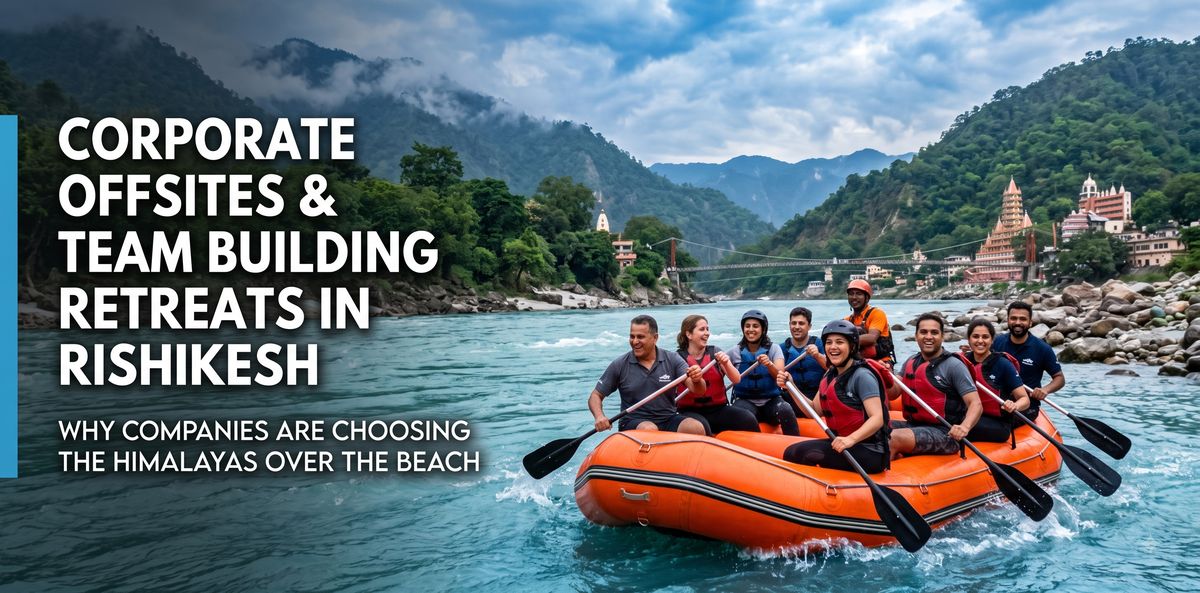
Corporate Offsites & Team Building Retreats in Rishikesh: Why Companies Are Choosing the Himalayas Over the Beach
Every HR calendar has the same recurring problem: the offsite. Book a resort, run a few trust falls, watch everyone quietly check Slack by hour two, and call it "team building." It's become such a predictable format that most employees now dread the words "offsite weekend" more than they look forward to it.
A growing number of companies — especially in Delhi-NCR, where the drive is short — are rethinking the format entirely, and Rishikesh has become a genuine alternative to the standard beach-resort offsite. Here's why it works, and how to actually plan one that doesn't feel like a corporate obligation.
Why Rishikesh, Specifically
It's close enough to be practical. For teams based in Delhi-NCR, Rishikesh is roughly a 5–6 hour drive or a short flight to Dehradun followed by a quick transfer — close enough for a 2–3 day offsite without burning a full day on travel each way.
It forces genuine disconnection. Unlike a business-hotel offsite in another metro, Rishikesh's setting — mountains, river, limited nightlife — naturally reduces the pull back to normal routines. Teams actually unplug here in a way a beach resort with a pool bar rarely achieves.
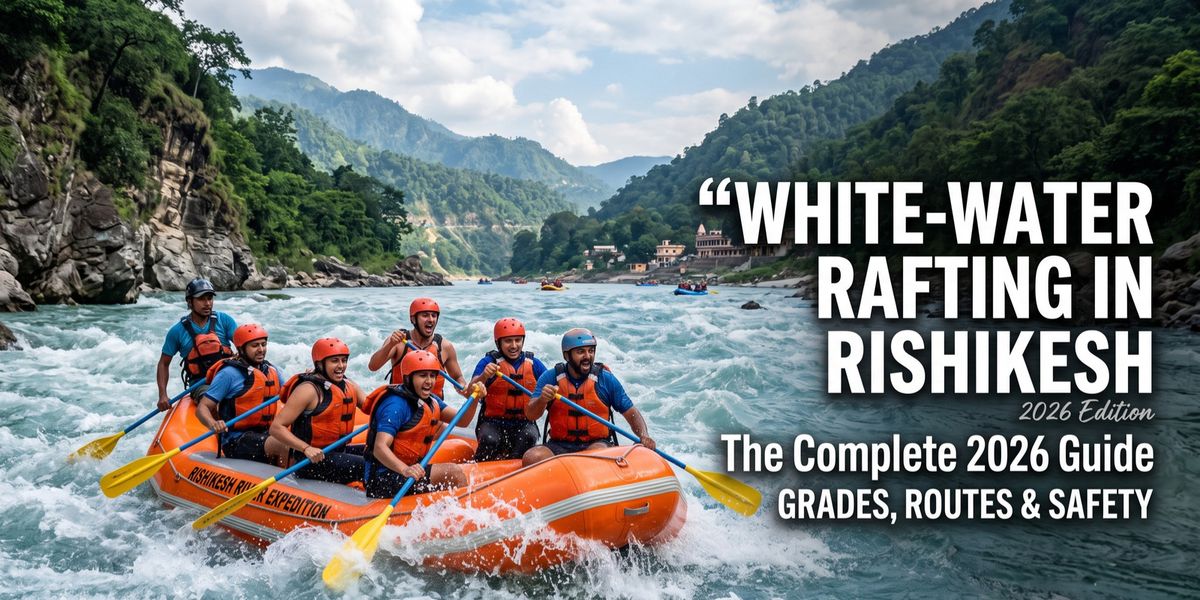
The activities are inherently collaborative, not performative. River rafting requires actual coordination and trust between teammates in a way no trust-fall exercise can simulate. A shared sunrise yoga session does more for genuine team rapport than an awkward icebreaker game ever will.
It addresses burnout, not just morale. Post-pandemic, most companies aren't just trying to boost morale with an offsite — they're trying to counter genuine burnout. A wellness-anchored location does double duty: it's a team-building trip and a recovery trip at once.
What to Actually Look for in a Venue
Before booking, corporate planners should evaluate a Rishikesh venue against a short, practical checklist:
- Group accommodation capacity — can the property comfortably house your whole team without splitting across multiple hotels?
- Meeting or workshop space — even a "disconnect" offsite usually needs one structured session; look for a quiet indoor space with natural light.
- Activity access — proximity to rafting operators, trekking routes, and a dedicated yoga space for group sessions.
- Food flexibility — a team of 20–40 people will have varied dietary needs; confirm the venue can handle vegetarian, vegan, and standard requests at scale.
- Wi-Fi and connectivity — ironically important; teams need reliable connectivity for the portion of the trip that isn't fully offline, especially if leadership needs to stay reachable.
Sample 2N/3D Corporate Offsite Itinerary
Day 1 — Arrival & Reset
Morning arrival and check-in. Light lunch, followed by an afternoon orientation walk along the Ganga. Evening: guided group meditation or a relaxed team dinner with no formal agenda — let people decompress from travel first.
Day 2 — Structured Activity + Strategy Session
Morning: river rafting or a guided trek (genuine collaborative activity, not a forced exercise). Midday: lunch and downtime. Afternoon: a 2–3 hour structured strategy or planning session in a quiet indoor space — this is where the "offsite" part of the offsite actually happens. Evening: sunset yoga session followed by a bonfire dinner.
Day 3 — Wellness Close & Departure
Morning: optional Ayurvedic therapy session or a final group yoga class. Breakfast, informal closing conversation or feedback circle, and departure by early afternoon.
This structure balances what most offsites get wrong: either too much unstructured "fun" with no real bonding, or too much agenda with no actual rest. The goal is roughly half genuine downtime, a third shared activity, and the remainder focused work time — in that order of priority.
Corporate Retreats at Roots & Peaks
At Roots & Peaks, our Corporate Wellness Retreats are built around this exact balance — a boutique setting in Upper Tapovan with a dedicated yoga shala for group sessions, Ayurvedic wellness therapies, sattvic and multi-cuisine dining at Café Hamsa, and quiet indoor spaces suited to a focused strategy session without feeling like a conference room. Because we keep group sizes intimate by design, your team stays together as a unit rather than scattered across a sprawling resort — which, frankly, is where most of the real bonding actually happens: over shared meals and unplanned conversations, not scheduled activities.
We work with teams to build a custom itinerary based on group size, objectives (pure recovery vs. strategy-heavy vs. a genuine mix), and dates — and can accommodate both structured workshop needs and fully informal wellness-first offsites.
Frequently Asked Questions
How far is Rishikesh from Delhi for a corporate offsite?
Approximately 5–6 hours by road, or a short flight to Dehradun's Jolly Grant Airport followed by a roughly 30–40 minute transfer.
What's the ideal length for a corporate offsite in Rishikesh?
Most teams find 2 nights / 3 days sufficient to genuinely disconnect and get value from structured sessions without eating too far into the work week.
Can Rishikesh venues handle large teams?
Boutique properties are generally best suited to teams of roughly 15–50; larger groups may need to coordinate across nearby properties or a larger resort format.
Is Rishikesh good for a purely wellness-focused offsite with no formal agenda?
Yes — many companies now run these specifically as burnout-recovery trips with yoga, Ayurvedic therapies, and minimal structured programming.
What's the best time of year for a corporate retreat?
October to February offers the most reliable weather for outdoor activities like rafting and trekking, along with the calmest, clearest conditions for group yoga sessions.