

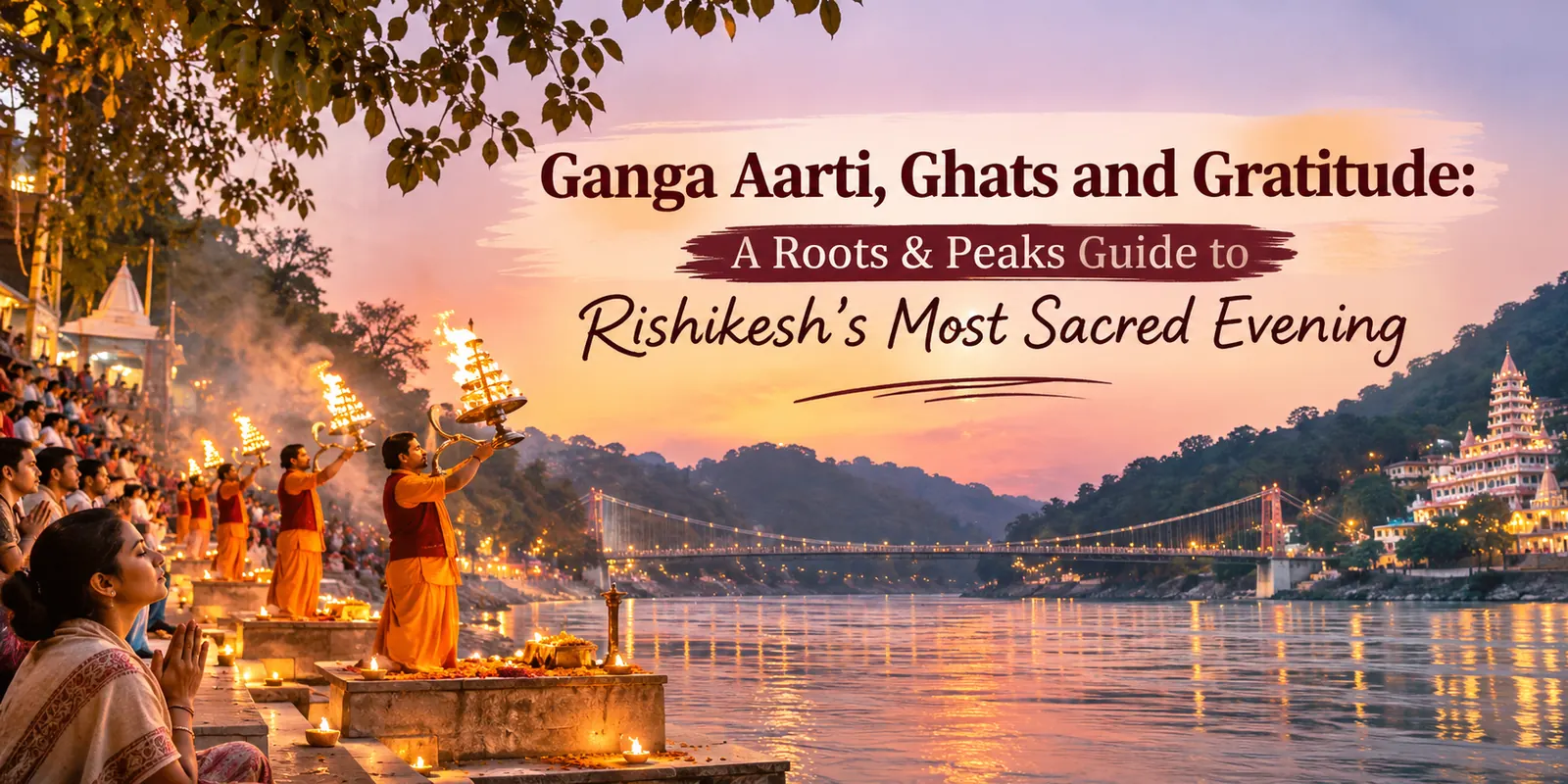
As the sun dips behind the hills, the Ganga turns gold, bells begin to ring and hundreds of voices rise together. The evening Ganga Aarti is one of the most moving experiences in Rishikesh, and you don't need to be religious to feel it. This guide covers where to go, what to expect and how to take part respectfully.
What Is the Ganga Aarti?
Aarti is a Hindu ritual of offering light, often using lamps, to the divine. In Rishikesh, it is performed in honor of Mother Ganga, who is revered as a living goddess. Priests wave fire lamps in rhythmic circles while devotees sing bhajans and chant. The atmosphere is devotional but warm, and visitors of all backgrounds are welcome.
Where to Watch the Aarti
Triveni Ghat
This is the most famous aarti spot in Rishikesh, where the Ganga, Yamuna and Saraswati are believed to meet. The ghat is large and the ceremony is grand, with chanting, music and floating diyas. It gets crowded, especially in peak season and on weekends.
Parmarth Niketan
Known for its peaceful, ashram-style aarti, this ceremony is often attended by travelers and spiritual seekers from around the world. Seating is on the ghat steps, and the mood is calm and prayerful.
Other Ghats
Smaller riverside ghats hold quieter ceremonies. If you want a less crowded experience, ask locals or your host for recommendations.
Aarti Timings
Aarti usually takes place around sunset, so the exact time changes through the year. As a rule of thumb, arrive 30 to 45 minutes early to secure a good spot and soak in the build-up. Always confirm the time on the day, as schedules can shift for festivals, weather or river conditions.
Etiquette: How to Attend Respectfully
- Dress modestly. Cover shoulders and knees, and carry a shawl.
- Remove footwear before stepping onto the ghat steps.
- Keep your phone silent. Photos are fine in most places, but avoid flash and don't block others.
- Don't point your feet toward the fire or the river.
- Participate gently. Clap, sing along or simply sit in silence.
- Avoid littering, including flower offerings and leaf cups. Use bins and keep the ghats clean.
- Be careful with floating diyas. Place them gently and don't crowd the water's edge.
Insider Tips for a Better Experience
- Go early for front-row seats and soft evening light.
- Sit slightly to the side to avoid crowds and still get a great view.
- Carry small change for diyas and flowers, and say no politely to pushy sellers.
- Watch your belongings in crowds. Keep bags zipped and in front of you.
- Plan transport back. Autos and taxis can be scarce after the ceremony, so arrange a ride in advance.
- Stay for the quiet afterwards. The minutes after the aarti ends are often the most peaceful.
Why It Matters: Gratitude on the Ganga
The aarti isn't a performance. It is an act of gratitude. For many guests at Roots & Peaks, it becomes the emotional high point of their stay. After days of yoga, meditation and slow mornings, sitting at the ghat feels like a natural ending to the day. If your trip has felt like a reset, the aarti often becomes the moment you realize it.
Making the Aarti Part of Your Rishikesh Stay
At Roots & Peaks in Tapovan, we're happy to help guests plan their evening, from timing to transport. You can pair the aarti with a yoga retreat in Rishikesh to create a full day of movement, stillness and reflection. If you are visiting in a group, our corporate retreat in Rishikesh programs can include a guided evening at the ghats.
Staying nearby also makes it easier to enjoy the aarti without stress. A comfortable boutique hotel in Tapovan, Rishikesh keeps you close to the river and still gives you a calm space to return to.
A Simple Evening Plan
- 4:30 PM: Leave your stay and walk or ride to the ghat.
- 5:15 PM: Find your seat and settle in.
- Sunset: Aarti begins. Sit, listen and breathe.
- After aarti: Light a diya, walk by the river or have a quiet dinner at a nearby cafe.
Final Thoughts
Whether you attend once or every evening, the Ganga Aarti has a way of quieting the mind. Bring an open heart, dress simply and let the moment hold you.
FAQs
1. What time is the Ganga Aarti in Rishikesh?
It happens around sunset, so timing changes with the season. Arrive early and confirm locally on the day.
2. Which is better, Triveni Ghat or Parmarth Niketan?
Triveni Ghat is larger and more crowded, while Parmarth Niketan is calmer and more ashram-like. Both are worth visiting.
3. Is there an entry fee for the aarti?
No, both are free to attend. Donations are voluntary.
4. Can tourists take photos?
Generally yes, but avoid flash and be respectful of worshippers and priests.
5. What should I wear to Ganga Aarti?
Modest, comfortable clothing, with a shawl for cooler evenings. Be ready to remove your shoes.