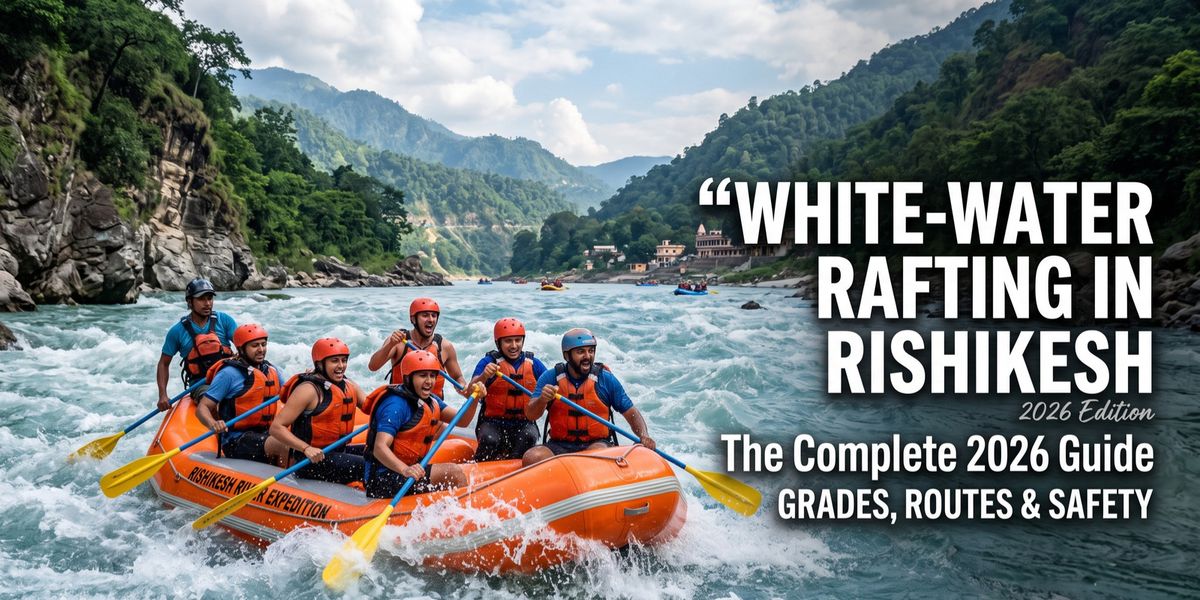
Why Rishikesh Is India’s Rafting Capital
The Ganga arrives in Rishikesh straight from the Himalayan glaciers, still carrying the churn of its descent through the mountains. That stretch of river between Shivpuri and Rishikesh town produces a genuinely varied set of rapids — playful splashes for first-timers and technical Grade IV water for those chasing adrenaline — all within a 16 to 36 km run.
Combined with easy access, licensed operators, and a backdrop of pine-covered hills, it is little wonder ‘rafting in Rishikesh’ is one of the most consistently searched adventure terms tied to the destination.
Understanding Rapid Grades Before You Book
- Grade I–II: Gentle, wave-like rapids suitable for children and complete beginners.
- Grade III: Moderate rapids with irregular waves — the standard difficulty on most short Rishikesh routes.
- Grade III+ / IV: Technical rapids with obstacles and stronger currents, found on longer stretches like Marine Drive to Rishikesh.
- Grade IV+: Found further upstream near Kaudiyala, reserved for experienced rafters and typically run with additional safety kayaks.
Most first-time visitors are best served by the Shivpuri to Rishikesh (16 km) or Marine Drive to Rishikesh (24 km) stretches, which mix Grade II–III rapids with calmer sections for swimming and cliff-jumping breaks.
The Main Rafting Routes at a Glance
- Brahmpuri to Rishikesh (9 km) — shortest route, ideal for families and nervous first-timers.
- Shivpuri to Rishikesh (16 km) — the most popular route, balancing thrill and accessibility.
- Marine Drive to Rishikesh (24 km) — longer route with more rapids and a scenic middle stretch.
- Kaudiyala to Rishikesh (36 km) — the full-day expedition route for experienced rafters.
Best Season for Rafting in Rishikesh
The official rafting season generally runs from mid-September through June, with a break during peak monsoon (roughly mid-June to mid-September) when river levels and currents are considered unsafe for commercial rafting.
October to March offers the clearest water and most comfortable weather, while April–May brings warmer days that make the post-raft swim spots especially appealing.
What a Rafting Trip Actually Costs
Pricing is generally structured per person by route length rather than as a flat fee, with shorter routes costing less than the full-day Kaudiyala expedition.
Prices usually include a certified guide, life jacket, helmet, and paddle. Check whether transport to the put-in point and a photography or video package are included or charged separately, as this is where costs commonly creep up.
Safety: What to Actually Check Before Booking
- Confirm the operator is registered with the Uttarakhand Tourism or Garhwal Mandal Vikas Nigam rafting permit system.
- Ask about the guide-to-raft ratio and whether a safety kayak accompanies longer routes.
- Check that life jackets and helmets are provided in good condition, not just present.
- Avoid rafting during or immediately after heavy rainfall, regardless of what an operator offers.
- Non-swimmers can raft safely with a properly fitted life jacket, but should disclose this to the guide beforehand.
Combining Rafting with a Wellness Stay
Adventure and stillness are not opposites in Rishikesh — most visitors do both. A morning rafting run followed by an afternoon Ayurvedic massage and an evening yoga session is one of the most popular ways travellers structure a Rishikesh itinerary.
It is easy to arrange when staying in Tapovan, which sits close to most rafting put-in and pickup points.
What to Pack for a Rafting Day
- Quick-dry synthetic clothing rather than cotton, which stays wet and heavy for the rest of the day.
- Secured water shoes or old sports shoes — flip-flops and sandals are a genuine safety hazard on wet rocks and in the raft.
- A dry bag or zip-lock pouch if you’re bringing a phone; most operators won’t be liable for lost electronics.
- Sunscreen and a cap — the reflection off the water intensifies sun exposure even on cloudy days.
- A full change of clothes and a towel left in the vehicle for the drive back.
Beyond the Raft: Cliff Jumping, Body Surfing & Bonus Stops
Most routes build in one or two calm-water stretches where the raft stops and guides encourage the group to jump in and float alongside it — a highlight for many first-timers that doesn’t show up in the official rapid-grade descriptions but is often the part people remember most fondly.
Some longer routes also pass small cliff-jumping spots of varying heights, always guide-supervised and optional. A handful of operators build in a riverside lunch stop on the full-day Kaudiyala route, so it’s worth asking in advance whether food is included or whether you should carry your own.
Rafting With Kids, Seniors, or First-Time Nervous Rafters
Family groups with a wide age range don’t need to skip rafting altogether — the short Brahmpuri to Rishikesh stretch is specifically positioned for this, with milder Grade I–II water and a shorter overall duration of around 45 minutes to an hour on the water.
Guides on these routes are typically well-practised at managing nervous first-timers, offering a calmer pace and more time explaining safety positions before the first rapid.
If anxiety about water is a genuine concern rather than mild nerves, it’s worth saying so at booking — a good operator will adjust the seating position and level of reassurance accordingly rather than treating every guest the same.
How Rafting Fits into a Wider Rishikesh Trip
For most visitors, rafting works best scheduled early in a multi-day stay rather than on the last day — it leaves time afterward for a massage or rest day to recover and avoids the awkwardness of a long drive home in wet clothes immediately after.
Pairing a rafting morning with an easy, low-key evening — a slow dinner or an early Ganga Aarti visit — tends to balance the adrenaline of the day well, rather than stacking a rafting run against another high-energy activity.
Frequently Asked Questions
Is rafting in Rishikesh safe for beginners?
Yes, the shorter routes (Brahmpuri to Rishikesh and Shivpuri to Rishikesh) are specifically designed for beginners, with Grade I–III rapids and full safety briefings before departure.
What is the minimum age for rafting?
Most licensed operators set a minimum age around 12–14 years for standard routes, though this can vary by operator and river conditions on the day.
Is rafting available during monsoon?
No. Commercial rafting is officially suspended during peak monsoon months (roughly mid-June to mid-September) due to dangerously high water levels and strong currents.
What should I wear and bring for rafting?
Quick-dry clothing, secured footwear (not flip-flops), a change of clothes, sunscreen, and a waterproof bag for phones and valuables if you want to bring them along.