

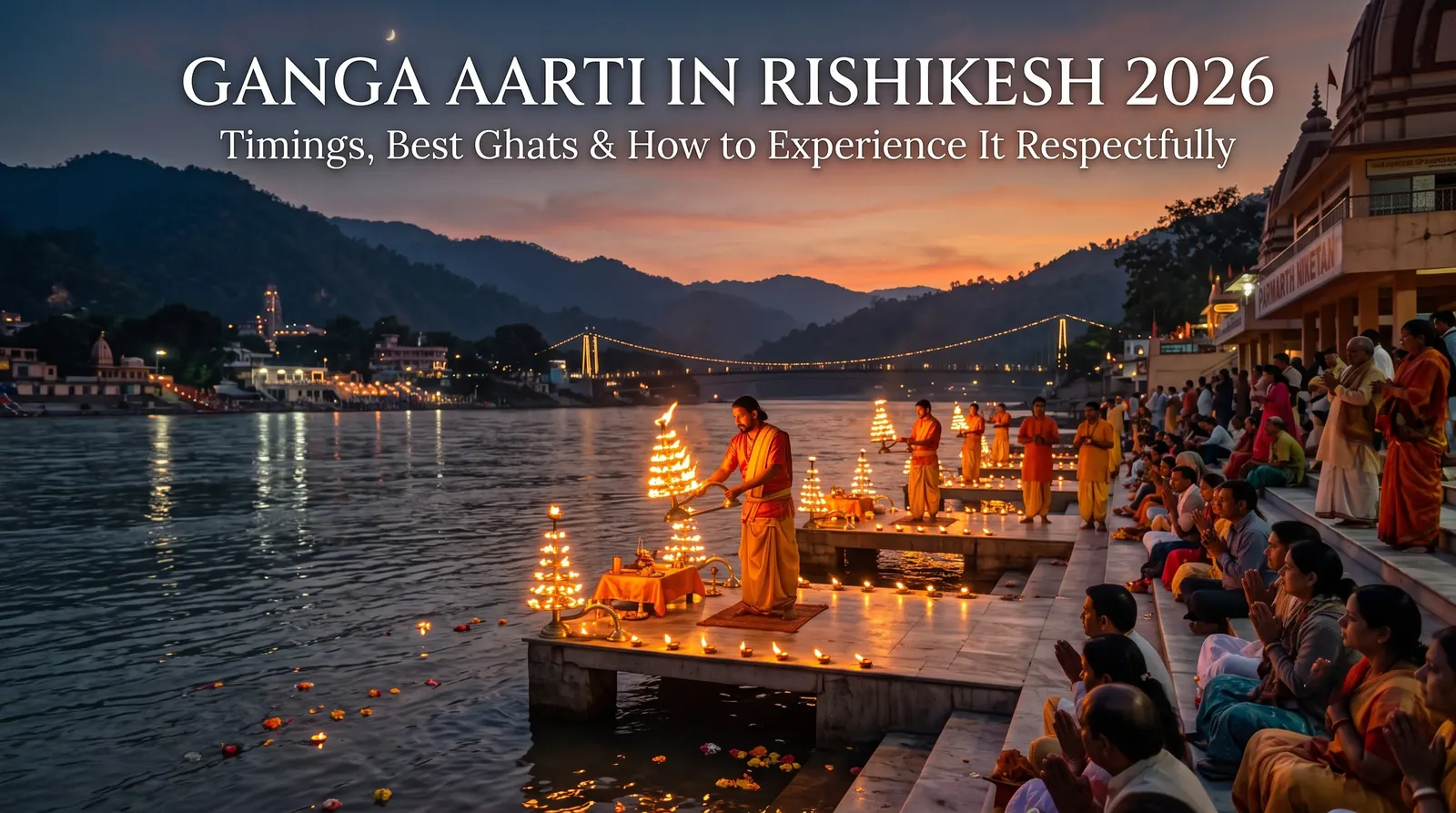
Ganga Aarti in Rishikesh 2026: Timings, Best Ghats & How to Experience It Respectfully
There is a particular moment, just as the sun drops behind the Himalayan ridgeline, when the Ganges in Rishikesh turns the colour of molten copper and the evening Ganga Aarti begins. Bells ring, a few hundred voices fall into the same chant, and rows of brass lamps are lifted and circled against the current. For many travellers, this fifteen-minute ritual becomes the single most-remembered part of an entire trip to Rishikesh — more than the yoga classes, more than the rafting, more than the cafes.
If you're planning to attend, here's what you actually need to know: timings, the best ghats to choose from, what's really happening in the ritual, and the etiquette that keeps it meaningful rather than performative.
What Is the Ganga Aarti, Exactly?
Aarti is a Hindu ritual of devotion in which fire — usually in the form of a multi-wick brass lamp — is offered to a deity or, in this case, to the river Ganga herself, who is worshipped as the goddess Ganga Ma. In Rishikesh, the evening aarti is performed daily as the sun sets, accompanied by devotional songs (bhajans), conch shells, temple bells, and sometimes a live orchestra of drums and cymbals.
It's part prayer, part performance, and — if you sit through it fully rather than photographing the first two minutes and leaving — genuinely moving.
Ganga Aarti Timings in Rishikesh (2026)
The aarti is timed to sunset, so it shifts through the year:
- Summer months (April–June): Approximately 7:00 PM–7:30 PM
- Monsoon (July–September): Approximately 6:45 PM–7:15 PM
- Winter months (November–February): Approximately 5:30 PM–6:00 PM
- Shoulder seasons (March, October): Approximately 6:00 PM–6:30 PM
Arrive twenty to thirty minutes early. The ritual itself is short, but the gathering, seating, and pre-aarti chanting build up well before the lamps are lit, and the best spots fill up fast in peak season (October–April).
The Best Ghats for Ganga Aarti in Rishikesh
Rishikesh has several places to experience the aarti, and they are not interchangeable — each has a distinct character.
Parmarth Niketan Ghat
Parmarth Niketan Ghat is the most famous and the most elaborate. Set inside India's largest ashram, right on the riverbank, this aarti involves dozens of young students from the ashram's gurukul, live singing, a fire ceremony, and often a genuinely large crowd of both pilgrims and tourists. It's spectacular, but it's also the least intimate option.
Triveni Ghat
Triveni Ghat, in the older part of Rishikesh town, is where locals go. It's less produced, more devotional, and gives a better sense of what the ritual looks like when it isn't primarily aimed at visitors. If you want the version that feels less like a show, this is it.
Ram Jhula and Lakshman Jhula Area Ghats
The ghats around Ram Jhula and Lakshman Jhula offer smaller, quieter aartis at various ashrams along the river. They are ideal if you'd rather watch from a distance with the mountains and the suspension bridge lights in the background than be part of a large seated crowd.
If you're staying with us at Roots & Peaks in Upper Tapovan, Parmarth Niketan and the Tapovan-side ghats are the most convenient — a short auto-rickshaw ride or a scenic walk down through Tapovan, depending on your energy for the return climb.
How to Attend Respectfully
This is a religious ceremony, not a tourist show, even where visitors are welcome and even where it is, frankly, also a tourist show. A few things go a long way:
- Dress modestly — shoulders and knees covered is a safe baseline.
- Sit where you're directed rather than pushing toward the front for a better photo.
- Keep phone flash off; the lamps and firelight are dramatic enough without it, and flash photography during prayer is considered disruptive.
- Participate thoughtfully. If you're offered a small floating diya (flower-and-candle offering) to release into the river, it's usually for a small donation and is a lovely way to participate rather than just observe.
- Stay through the full ritual if you can. Leaving mid-chant to beat the crowd out is noticeable and, to many attendees, a little disrespectful.
Pairing the Aarti with Your Rishikesh Evening
Most travellers combine the aarti with an early dinner either before or after. If you're coming from Tapovan, Café Hamsa at Roots & Peaks serves sattvic and multi-cuisine dinner with Himalayan views, making it easy to time your evening around sunset without rushing back up the hill hungry.
Many guests on our yoga retreats build one evening aarti visit into their itinerary — it pairs naturally with a day of practice, since both are, in their own way, about presence.
FAQs
What time is the Ganga Aarti in Rishikesh today?
It follows sunset, so it shifts roughly between 5:30 PM in winter and 7:30 PM in summer. Check the current month's approximate sunset time and plan to arrive 20–30 minutes early.
Is the Ganga Aarti free to attend?
Yes, attending is free at all major ghats. Donations are welcomed but never mandatory, and small floating diya offerings are usually available for a nominal amount.
Which is better — Parmarth Niketan or Triveni Ghat?
Parmarth Niketan is larger, more elaborate, and more crowded; Triveni Ghat feels more local and devotional. Neither is objectively "better" — it depends on whether you want spectacle or intimacy.
Can non-Hindus attend the Ganga Aarti?
Absolutely. The aarti is open to everyone regardless of faith or nationality. Respectful, modest attendance is welcomed and common among international visitors.
How long does the Ganga Aarti last?
The core ritual runs about 20–30 minutes, though the surrounding chanting and gathering can extend the experience to 45 minutes to an hour if you arrive early and stay through the closing prayers.